
Varanasi and Sarnath: Ritual and Public Meaning
Varanasi and Sarnath: Ritual and Public Meaning
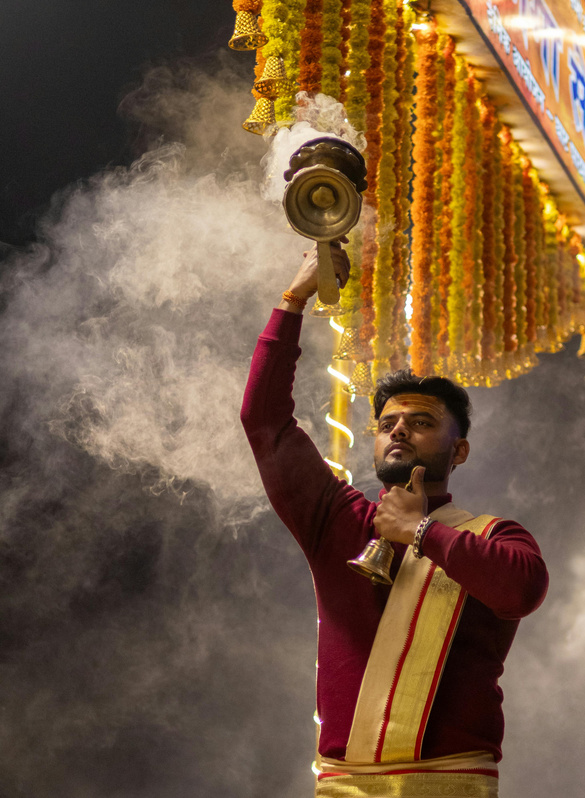
Varanasi offers immersion in ritual public life, sacred urban systems, and narrative continuity. Students document processions, pilgrimage pathways, and everyday ritual practice as forms of public communication.
Sarnath deepens the inquiry by introducing philosophical and historical perspectives, allowing comparison across sacred traditions and interpretive frameworks. Rather than romanticizing sacred space, the program emphasizes disciplined documentation, ethical observation, and contextual analysis.
Students explore how meaning is performed, inherited, contested, and sustained within one of the world’s oldest living cities.
Students will:
-
Document ritual as structured public language rather than spectacle.
-
Analyze sacred urbanism as an interplay between devotion, economy, and governance.
-
Ask: How does a city sustain sacred continuity while navigating modern transformation?
-
Compare philosophical traditions across adjacent sacred landscapes.
-
Practice ethical engagement in sacred environments with disciplined observational standards.
-
Produce a ritual and narrative portfolio integrating mapping, oral histories, and interpretive essays.
-
Explore how memory becomes embodied through performance and pilgrimage.
Read More

Religious Studies

Anthropology

Literature

Philosophy
.gif)
Cultural Studies
%20(1).gif)
Performance Studies

Varanasi
Sarnath
Public Ritual Spaces
Sacred Institutions