
Chandigarh and Dharamshala: Design and Civic Memory
Chandigarh and Dharamshala: Design and Civic Memory
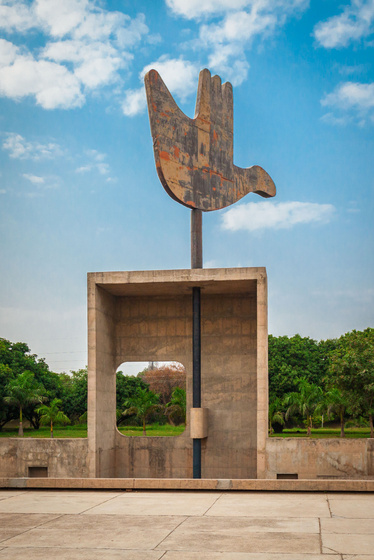
This program contrasts two distinct civic landscapes. In Chandigarh, students examine modernist planning as an architectural expression of citizenship, governance, and post independence aspiration. Sector layouts, institutional buildings, and civic axes are interpreted as spatial arguments about democracy and order.
The transition to Dharamshala introduces questions of displacement, cultural resilience, and institutional continuity within a Himalayan setting. Students analyze how memory, exile, and identity are preserved and negotiated in lived community contexts.
Together, these sites create a comparative inquiry into how design intention meets lived experience and how space carries both political vision and cultural memory.
Students will:
-
Interpret urban planning and architectural design as philosophical statements about citizenship and governance.
-
Examine how displacement reshapes institutional continuity and community memory.
-
Ask: Can a planned city create civic identity, or does identity emerge despite design?
-
Analyze how exile communities sustain narrative, ritual, and institutional life across generations.
-
Compare formal design systems with lived cultural adaptation.
-
Produce a comparative civic and memory portfolio integrating spatial analysis and narrative documentation.
-
Explore tensions between modernist vision and lived complexity.
Read More

Architecture

Urban Studies
.gif)
History

Political Theory
.gif)
Cultural Studies

Anthropology
.gif)
Migration Studies

Chandigarh
Public Institutions
Dharamshala
Community and Cultural Institutions